
A truly luxury modern bungalow is defined by four things working together — architectural clarity, material quality, deliberate spatial flow, and the integration of outdoor living with interior comfort. It is not about adding expensive finishes to a conventional layout. It is about designing a home where every decision, from the structural form to the door hardware, reflects a coherent vision executed with precision.
There is a version of "luxury bungalow design" that is actually just a conventional bungalow fitted with premium materials. Marble countertops on a poorly planned kitchen. A chandelier in an entrance hall with bad proportions. A swimming pool positioned as an afterthought at the back rather than as an integral part of the home's spatial experience.
That is not luxury. That is expensive renovation without design intelligence behind it.
A genuinely luxurious modern bungalow in Malaysia feels different from the moment you approach it. The proportions of the facade are right. The entry sequence — from the gate to the front door — has been considered as a journey, not just a path. Inside, the rooms flow logically into each other, the natural light moves through the home throughout the day, and the materials speak to each other coherently rather than competing.
This guide covers what actually makes a luxury modern bungalow design outstanding — the principles, the decisions, and the details that experienced designers and discerning homeowners understand to be the real markers of quality. For a comprehensive starting point on planning the full scope of a bungalow project, our bungalow renovation Malaysia guide covers the process from first principles.
What Genuinely Defines a Luxury Modern Bungalow — And What Doesn't
Clean lines are the beginning, not the destination
Modern bungalow design is characterised by clean architectural lines, generous volumes, and a restraint that allows quality materials to do the expressive work. This is widely understood. What is less widely understood is that clean lines are among the hardest design outcomes to achieve and maintain.
Every junction, every corner, every transition between materials must be executed with precision for a minimalist aesthetic to read as luxury rather than merely bare. A poorly mitred corner on a stone cladding installation undermines the entire facade. A ceiling cornice that is even slightly misaligned in a large, simply finished room is immediately visible. The simplicity of a modern bungalow is unforgiving — it removes the decorative complexity that can conceal imprecision in more ornate styles.
This is why luxury modern bungalow design is not primarily a material question. It is a construction quality question. The best materials, poorly installed, look worse than good materials installed by craftspeople who understand the tolerances the design demands.
Natural light is a structural decision, not a window decision
The emphasis on natural light in a modern bungalow house design is frequently reduced to a conversation about window size. In reality, it begins at the architectural and structural level — with decisions about building orientation, ceiling height, floor plan configuration, and the relationship between internal spaces and external landscape.
A bungalow oriented correctly on its site, with the main living areas facing the right direction for morning or afternoon light depending on how the family lives, will always feel brighter and more comfortable than one where glazing has been maximised without reference to the sun's path. Skylights in the right positions — above stairwells, in bathroom ceilings, over internal courtyards — bring daylight into the heart of the home rather than just its perimeter. Glass doors that open the living areas toward the pool and garden allow light to enter from multiple directions simultaneously.
These are not afterthoughts to the design. They are the design.
Single Storey Bungalow Design: The Art of Horizontal Living
Why a single storey bungalow demands more design discipline, not less
There is a common assumption that single storey bungalows are simpler to design than double storey homes. In terms of structural complexity, this is partly true. In terms of spatial design, it is the opposite. Without the vertical dimension to separate zones, every function — living, dining, cooking, sleeping, working, bathing — must coexist on a single plane. Managing these adjacencies well, without the home feeling like a series of rooms strung together, is one of the more demanding challenges in residential design.
The best single storey bungalows feel like a unified home rather than a collection of spaces. This requires a clear hierarchy of rooms, a circulation strategy that moves people through the home intuitively, and a consistent spatial language that makes every room feel like it belongs to the same design concept.
Open-plan living: what it means and what it requires
The open-plan ground floor — living, dining, and kitchen flowing together without full-height walls between them — is the dominant spatial strategy in contemporary single storey bungalow design. It creates visual depth, encourages natural light to travel across the full width of the home, and makes the total area feel larger than its measurements suggest.
But an open-plan space only works when the zones within it are clearly defined. Without definition, open-plan becomes simply open — undifferentiated and difficult to furnish or inhabit comfortably. Definition comes from changes in ceiling height, from area rugs that anchor each zone, from the positioning of furniture that creates implied boundaries without physical walls, and from lighting that differentiates the dining moment from the living moment and from the kitchen moment.
Our luxury bungalow contractor Malaysia services page shows how we approach this in practice — with open-plan designs that feel spatially coherent and fully liveable rather than just photographically impressive.
The seamless indoor-outdoor connection — done properly
Sliding glass doors or bi-fold walls that open the living area to a covered outdoor terrace or pool deck are one of the defining spatial moves of the contemporary Malaysian bungalow. When these transitions are designed well, the boundary between inside and outside becomes genuinely ambiguous — the interior extends into the garden, and the garden becomes a room.
Achieving this requires more than large doors. It requires the floor level to be continuous — or very nearly so — between inside and outside, eliminating the step that would otherwise break the visual and physical flow. It requires the ceiling or roof overhang to extend outward sufficiently to provide shade and weather protection, making the outdoor zone genuinely usable in Malaysia's climate year-round. And it requires the landscaping to be designed as a spatial continuation of the interior rather than a separate element that happens to be adjacent to it.
Double Storey Bungalow Design: Scale, Privacy, and Spatial Hierarchy
Using two floors to create genuine spatial hierarchy
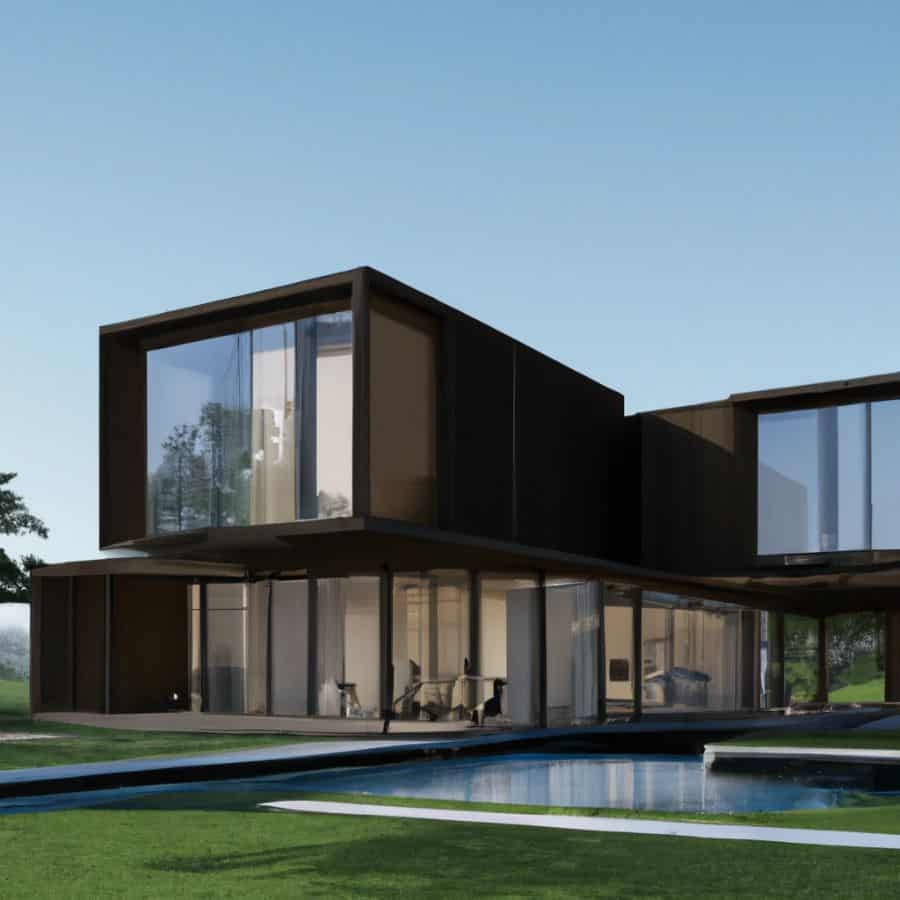
The double storey bungalow offers something the single storey cannot: a natural separation between the public life of the home and its private retreat. This vertical division, when designed with intention, creates a home that functions at a different level of sophistication.
The ground floor — living areas, kitchen, dining, entertainment spaces, guest suite — carries the social and functional weight of the household's public life. The first floor becomes a genuinely private domain: master bedroom with its own sitting area, children's bedrooms, a family lounge, perhaps a study or prayer room. The staircase that connects these two worlds becomes one of the home's most architecturally significant elements — a transition that marks the shift from shared to private, from public to personal.
For the full range of layout approaches available in double storey bungalow design, the differences in footprint, orientation, and programmatic requirements are significant enough to deserve dedicated exploration.
Rooftop terraces and balconies: outdoor space at elevation
In a double storey bungalow, the first floor creates rooftop area over parts of the ground floor that can be converted into genuinely liveable outdoor space. A rooftop terrace with good weather protection — a pergola with retractable louvres, a proper roof structure with open sides — becomes one of the most used and most valued spaces in the home.
Similarly, a deep first-floor balcony connected to the master bedroom or family lounge extends the private zones of the home into the open air. In Malaysia's climate, a balcony that is deep enough to sit in — a minimum of 2.5 to 3 metres in depth to provide real weather shelter — and furnished properly is a room in its own right. A shallow balcony that provides no weather protection is a feature that looks good on the plan and almost never gets used.
Contemporary Bungalow Design: Where Sustainability Meets Sophistication
Sustainable design is not a compromise — it is a quality indicator
The most consistently overlooked aspect of luxury bungalow design in Malaysia is passive performance — how the building itself manages heat, light, and airflow before any mechanical systems are switched on. A home that is oriented correctly, shaded appropriately, and ventilated naturally will be significantly more comfortable and less expensive to run than one that relies entirely on air conditioning to compensate for poor passive design.
Deep overhangs on west-facing elevations protect against afternoon sun — one of the most intense heat sources in Malaysia's climate. Internal courtyards or light wells create stack ventilation that draws cool air through the home naturally. High-performance glazing reduces solar heat gain without sacrificing the visual connection to the garden that the design depends on.
These are not concessions to sustainability at the expense of aesthetics. They are the marks of a sophisticated building that is designed for its specific climate and site rather than as a generic luxury product dropped onto any plot.
Solar panels integrated flush into a flat roof, energy-efficient air conditioning with individual zone control, LED lighting throughout, and heat-pump water heaters are the practical technologies that reduce the operational cost of a luxury bungalow meaningfully over its lifetime. Green building materials — engineered timber, recycled content concrete, responsibly sourced cladding — contribute to both performance and the home's environmental credentials.
Smart home technology: what belongs and what doesn't
The integration of smart home technology in a contemporary bungalow is most valuable when it solves real problems rather than demonstrating novelty. Automated lighting scenes that adjust throughout the day and evening, reducing the need to manually manage dozens of individual switches in a large home — valuable. A voice-activated oven — not particularly valuable.
The most genuinely useful smart home integrations in a Malaysian luxury bungalow context are: centralised lighting control with scene-setting capability across all rooms; automated climate control with individual zone management that prevents air conditioning running in unoccupied rooms; integrated security including cameras, smart locks, and alarm monitoring; and motorised window treatments that can be programmed to close before the afternoon sun heats the western rooms.
All of these require infrastructure to be planned into the building from the outset — conduits, power points, network cabling, control panels. Retrofitting smart home technology into a completed bungalow is expensive and disruptive. Building the infrastructure in during construction and then adding technology progressively is the intelligent approach.
The Material Details That Define Genuine Luxury
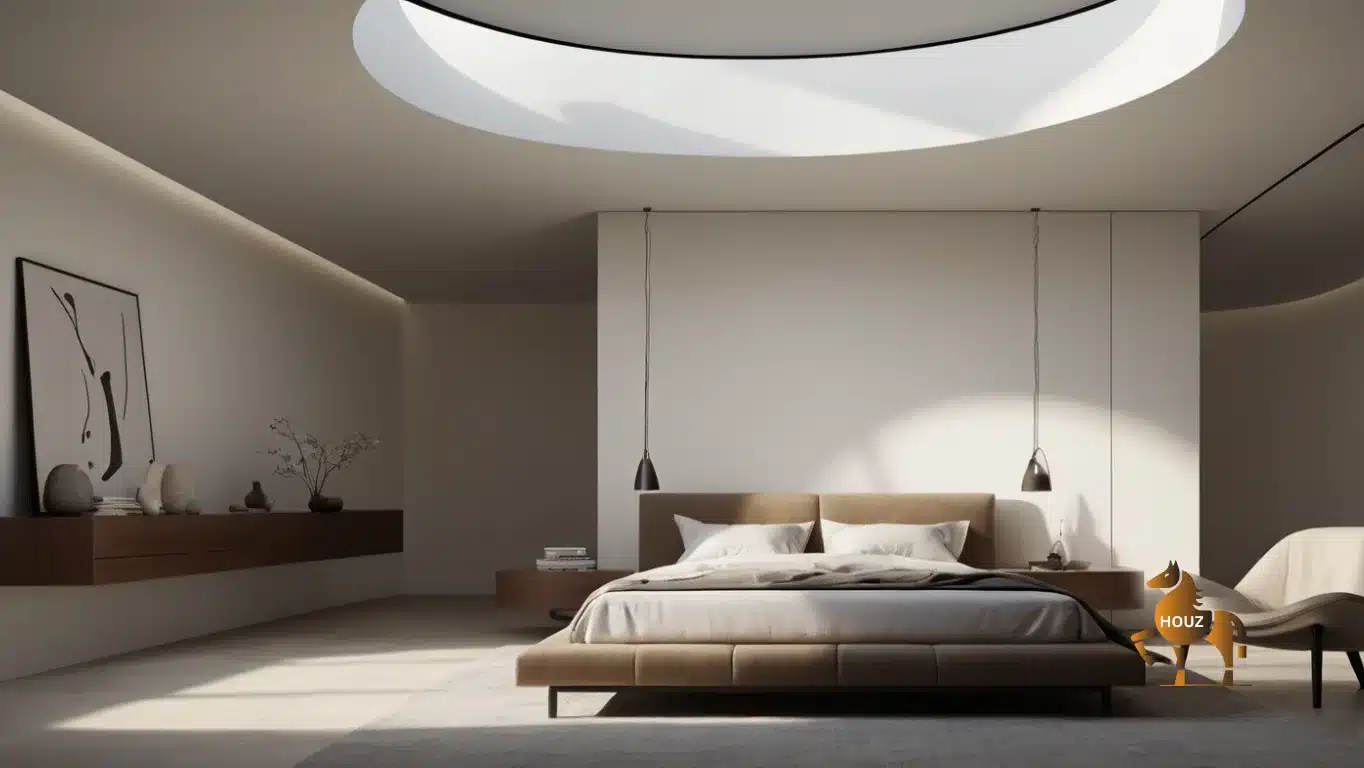
Surface materials: quality versus the appearance of quality
There is a meaningful difference between materials that are expensive and materials that are genuinely high quality. Expensive marble poorly installed, without the substrate preparation and grouting precision that stone requires, will crack, stain, and look tired within a few years. Good quality porcelain slab, specified correctly and installed by a team who understands the material, will look immaculate for decades.
In a luxury bungalow context, the hierarchy of material investment should follow the hierarchy of surface area and daily contact. Floors receive the most attention and the most footfall — invest here. Countertops in the kitchen and bathrooms receive constant use and require both quality materials and quality installation. Walls receive less physical contact but a great deal of visual attention — here, the finish quality of the paint application, the precision of the tile work, and the flatness of the plastered surfaces matter as much as the material specification itself.
Hardwood floors add warmth to a modern bungalow interior that stone and tile cannot replicate. The key in Malaysia's climate is species selection — locally sourced hardwoods that are acclimatised to high humidity outperform imported species that may move, gap, or cup as they adjust. Marble in the entrance hall and master bathroom is a legitimate luxury choice, but it demands sealing, maintenance, and careful specification of the stone grade.
Custom joinery: the detail that separates designed homes from renovated ones
The single most reliable indicator of genuine design intent in a luxury bungalow is the quality and integration of custom joinery. Off-the-shelf cabinetry, however premium the brand, cannot be made to fit the specific proportions of a room, to meet a ceiling at exactly the right height, or to incorporate the specific combination of storage, display, and technology integration that a particular household needs.
Custom joinery in the kitchen — cabinetry that runs floor to ceiling, integrates appliances flush with the cabinet face, and includes specific internal fittings designed around actual cooking habits — is a fundamentally different product from fitted cabinetry. The same applies to wardrobes, to built-in media units, to bathroom vanities, and to the entry console that defines the first impression of the home's interior.
A bungalow design in Kuala Lumpur that invests in custom joinery throughout will consistently feel more resolved and more genuinely luxurious than one that has spent the same total budget on premium appliances and expensive floor tiles but retained standard cabinet configurations.
The landscaped garden: the fifth elevation of a luxury bungalow
In architecture, the four elevations of a building are its four external faces. For a bungalow, the landscape is effectively the fifth — the horizontal plane that the home sits within, that visitors experience on approach, and that the interior looks out onto from every ground-floor room.
A luxury bungalow without a considered garden is a luxury product with an unfinished presentation. The planting, the hard landscaping, the water features, the external lighting, the pool or water body design — these are not decorative additions to the project. They are integral to the spatial experience of the home.
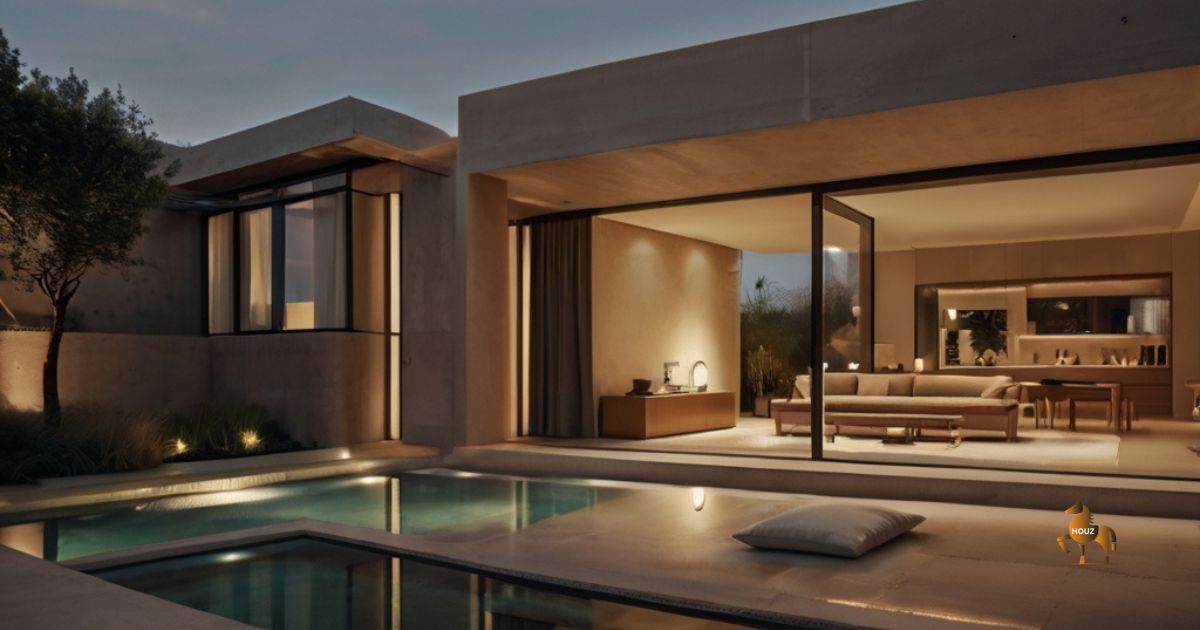
Mature planting — trees and large shrubs that are installed at a size that creates immediate impact rather than requiring years to establish — is one of the most high-value investments in bungalow landscape design. A infinity pool designed in alignment with the interior floor level so that the water appears to be an extension of the living space rather than a separate amenity adds a spatial sophistication that is disproportionate to its additional cost over a conventional pool.
An outdoor kitchen on a covered terrace adjacent to the pool completes the picture — creating an outdoor living zone that is genuinely usable in Malaysia's climate for the majority of the year.
The Design Process: Why Getting This Right Requires the Right Team
Why luxury bungalow design cannot be separated from its build
The gap between a luxury bungalow that looks right in concept and one that actually delivers on that concept in its finished state is almost always a construction quality and coordination question. The design intent can be flawless on paper. If the builder does not understand the tolerances that a minimalist modern aesthetic demands, if the structural team and the interior team are not integrated in their decision-making, and if the project management does not ensure that finishes are executed with the precision the design requires — the result will fall short.
This is the central argument for the design-and-build model in luxury bungalow projects. When the design team and the build team operate under a single system of accountability, with shared understanding of the intent and shared responsibility for the outcome, the translation from concept to reality is fundamentally more reliable.
For inspiration on what this integrated approach delivers in practice, our modern bungalow design in Damansara Heights project demonstrates how open-concept living, material quality, and landscape integration work together in a completed home — not as a rendered visualisation, but as a finished building that a family lives in.
Starting the conversation at the right point
The most common mistake in luxury bungalow projects is starting with the interior design before the architecture and structure are properly resolved. Interior design decisions — particularly joinery, lighting positions, wet area tile patterns, and built-in furniture — are all downstream of structural decisions about ceiling heights, beam positions, column locations, and floor slab levels. When these structural decisions are made without the interior outcome clearly in mind, the interior design team is constrained in ways that compromise the finished result.
The right starting point is a brief that addresses the home's spatial ambitions, functional requirements, and aesthetic direction simultaneously — before any individual design discipline has drawn a line. From that shared starting point, the architectural, structural, and interior decisions can be made in coordination rather than sequentially.
Conclusion: Luxury That Actually Lives Up to the Name
A luxury modern bungalow in Malaysia is not defined by its price per square foot. It is defined by the intelligence of its spatial planning, the quality of its material execution, the integration of its landscape with its interior, and the degree to which every decision — large and small — has been made with the finished experience in mind.
The homes that genuinely earn the description are the ones where the design vision was held consistently from the first sketch to the final installation. Where the builder understood what the designer intended and had the skill to deliver it. Where the materials were specified correctly for the climate and installed with the precision the aesthetic demands. And where the owner, when they walk through the front door at the end of a long day, feels that the home was made specifically for them — because it was.
If you are at the beginning of planning a luxury bungalow project, the most valuable first step is a conversation with a team that understands this entire picture — not just the visual design, but the structural requirements, the material specifications, the build management, and the integration of landscape and interior that makes a bungalow genuinely exceptional. Our luxury bungalow contractor Malaysia team works across all of these disciplines from a single point of accountability. Call us at 012-591 4689 to begin the conversation.
Frequently Asked Questions
What is the difference between a luxury modern bungalow and a standard bungalow renovation? A luxury modern bungalow is designed from first principles — where architectural form, material selection, spatial flow, and landscape integration are all resolved as a coherent whole. A standard renovation improves an existing home's finishes without necessarily addressing the spatial or structural decisions that determine how well the home actually functions and feels.
Is a single or double storey bungalow better for luxury living in Malaysia? Neither is categorically superior. A single storey bungalow offers seamless horizontal flow and a stronger connection to the landscape. A double storey bungalow provides clearer separation between public and private zones and typically better natural ventilation through the height of the building. The right choice depends on the site, the family's lifestyle, and the specific design intent.
What materials are most associated with genuine luxury in Malaysian bungalow design? Marble and large-format stone or porcelain surfaces in wet areas and entrance halls. Hardwood flooring in living areas and bedrooms — locally sourced species perform best in Malaysia's humidity. Custom joinery in kitchen and bathroom with quality hardware. Architectural concrete as a feature wall or ceiling element. These materials are not inherently luxurious — their quality depends entirely on specification and installation.
How much does a luxury modern bungalow design and build cost in Malaysia? This varies significantly with scale, material specification, site complexity, and fitout level. A comprehensive luxury bungalow design and build project in Malaysia's premium residential areas typically ranges from RM2 million to RM6 million and above, depending on built-up area and the level of customisation. The most reliable way to establish a realistic budget for your specific project is through a professional consultation that assesses your site, your brief, and your timeline.
How long does a luxury bungalow design and build project take in Malaysia? A full design and build project — from initial concept through council approval, construction, and fitout — typically runs eighteen months to three years depending on the scale of the home and the complexity of the build. Design and approval typically occupies the first six to nine months. Construction and fitout occupy the remainder. Realistic timeline management from the outset is a hallmark of a professional design and build team.

Recent Comments