

What Does Bungalow Renovation Actually Cover?
Bungalow renovation in Malaysia is not a single thing. It is a spectrum — from surface updates that take eight weeks, to full structural transformations that take eighteen months. Understanding which level applies to your property is the most important decision you will make before spending a single ringgit.
range by scope
by renovation level
clearly defined
design + build
A bungalow renovation can mean many things.
For one homeowner, renovation means new flooring, a refreshed kitchen, and repainting throughout — work that takes ten weeks and costs RM 120,000. For another, it means stripping the entire interior to bare concrete, replacing every M&E system, extending the rear, and rebuilding the kitchen and master suite from scratch — work that takes fourteen months and costs RM 1.2M.
Both are bungalow renovations. They share almost nothing else in common — not the team required, not the consultants involved, not the approvals needed, and not the design approach. Getting clarity on your level before engaging anyone protects your budget and your sanity.
- Detached bungalows of all eras — 1960s to 2000s and beyond
- Post-war single-storey homes and pre-war character bungalows
- 1980s and 1990s double-storey bungalows in mature estates
- Resale bungalows purchased in original or unimproved condition
- Inherited family homes requiring full modernisation
- Newer bungalows needing layout improvements and M&E upgrades
- Bungalows with rear or side extension potential
- Old bungalows with chronic water infiltration or structural issues
The 3 Levels of Bungalow Renovation in Malaysia
Every bungalow renovation falls into one of three levels. Your level determines your budget, your timeline, your consultants, and whether you need council approval. Start here.
- Interior and exterior repainting
- New flooring — tiles, timber, vinyl planks
- Kitchen cabinet replacement or refacing
- Bathroom retiling and fixture replacement
- Lighting and switchgear upgrade
- Curtains, feature wall, soft furnishings
- Full gut of all rooms — walls opened, ceilings stripped
- Complete M&E overhaul — rewiring, replumbing, new AC
- Custom carpentry throughout — wardrobes, kitchen, study
- Full kitchen redesign with new layout and wet kitchen
- All wet areas rebuilt with proper waterproofing systems
- New windows, doors, grilles, and ironmongery
- Ceiling design, cove lighting, architectural detailing
- Rear extension — kitchen, dining, family hall
- Side extension — additional bedroom or garage
- Rooftop addition or attic conversion
- New car porch or garden pavilion structure
- Swimming pool construction
- All Level 2 works included throughout
- Architectural drawings and engineering required
What Era Is Your Bungalow? It Changes Everything.
Old bungalow renovation in Malaysia is not one-size-fits-all. The construction method, material quality, M&E systems, and structural risks vary enormously between a 1965 timber bungalow in Petaling Jaya and a 1992 brick-and-concrete home in Ampang. Understanding your bungalow's era tells you what you are working with — and what to expect when the walls come down.
Below is our era-by-era guide to the most common bungalow types in Malaysia, what they typically contain, and the renovation considerations specific to each.

Timber-framed or mixed construction. Often sit on generous plots in areas like Ampang, Taman Midah, and older parts of PJ. Character and charm — but also significant risk.
- Likely asbestos in roofing, ceiling tiles, or floor coverings — professional testing required before any demolition
- Timber floor joists may be compromised by termites or moisture — structural engineer assessment essential
- Original electrical wiring is decades past safe service life — full rewire is non-negotiable
- Plumbing in galvanised iron — replace entirely with UPVC or copper
- High potential for character preservation — retained timber elements, pitched rooflines, original floor tiles
Mixed brick-and-timber or full brick construction. Many established estate bungalows in Petaling Jaya SS sections, Bangsar, and Damansara fall into this category. Very common renovation candidate.
- Asbestos still possible in ceiling boards and insulation — always test before any ceiling demolition
- Foundation may be unreinforced strip — check before adding structural load for extensions
- Original electrical systems are aluminium wiring era — full rewire mandatory for any full renovation
- Bathrooms and kitchen will have original cast iron or galvanised drainage — replace all
- Excellent plot sizes with rear garden space for extensions
Full RC frame construction becomes standard. Bungalows in areas like Taman Tun Dr Ismail (TTDI), Sri Hartamas, and Ampang Hills originate in this decade. Structurally more reliable — but still ageing significantly.
- Concrete spalling risk — check columns, beams, and roof slab for exposed, corroded rebar
- Waterproofing has likely failed — rooftop slabs, bathrooms, and planters are common infiltration points
- Electrical systems typically 3-pin UK-style — rewire for modern load requirements especially for EV, AC
- Layouts often compartmentalised — excellent candidates for open-plan transformation
- Generally strong bones — full renovation delivers outstanding results in this era
Larger double-storey bungalows with more elaborate forms. Common in Desa ParkCity (early phases), Damansara Utama, and Bukit Kiara. Structurally sound but design is visually dated.
- Structural integrity generally good — focus renovation budget on interior and M&E
- Waterproofing at wet areas typically failing after 25–30 years — rebuild all wet areas from screed up
- Kitchen and bathroom layouts reflect 1990s standards — very receptive to open-plan transformation
- Air conditioning systems obsolete — full replacement with inverter or VRV system
- Facade and roof form often heavy and dated — significant opportunity for exterior modernisation
Bungalows in newer gated developments — Duta, Bukit Jalil, and newer Kajang townships. Structure is sound. The renovation is driven by personalisation, lifestyle upgrade, and taste rather than structural necessity.
- Full renovation still warranted if the previous owner's finishes conflict with your aesthetic direction
- M&E systems may still have serviceable life — assess before replacing wholesale
- Focus budget on kitchen, master suite, living areas, and facade for maximum impact
- Smart home integration, EV charging, and solar PV are all retrofittable at this era
Which Design Style Suits Your Bungalow?
The architecture and era of your bungalow creates a starting point for design direction. These are the four styles most requested by Houz Design's bungalow clients in 2026 — each with its own material language, cost implication, and contextual fit.
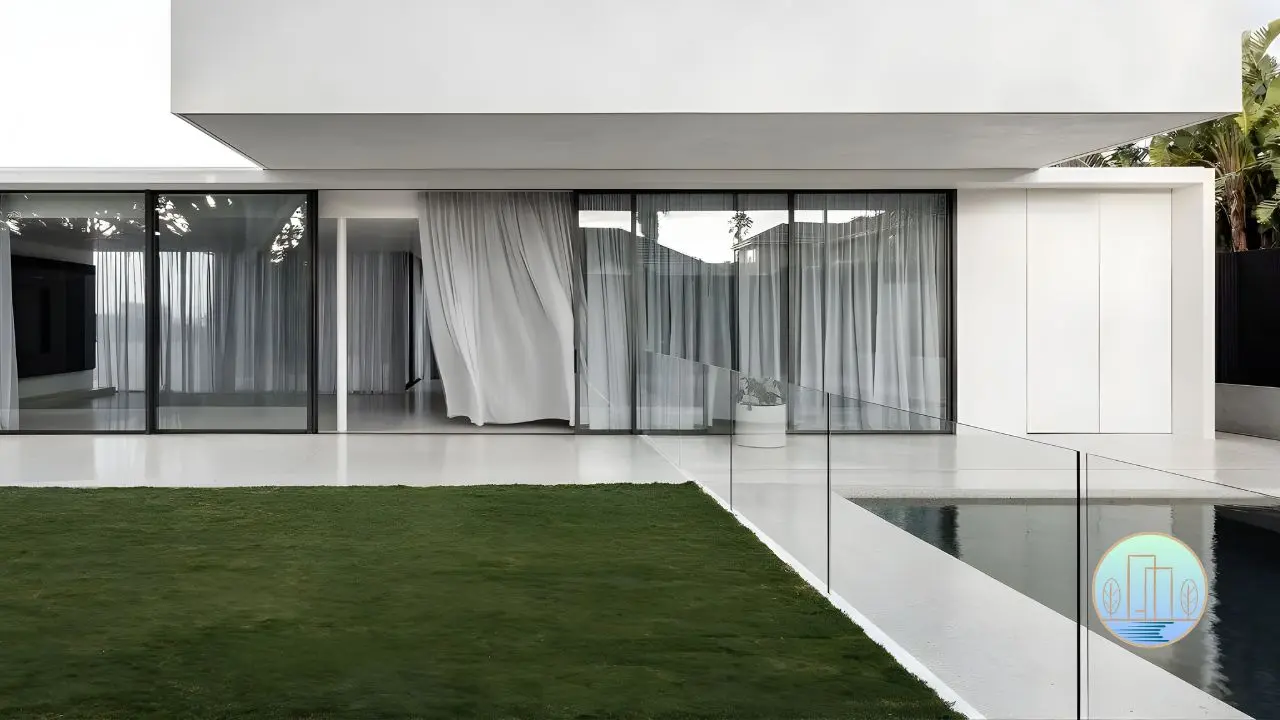
01 — Modern Tropical Contemporary
The Most Requested Style in Malaysian Bungalow Renovation
Deep overhangs, cross-ventilation, floor-to-ceiling glazing, and natural materials — timber battens, local stone, rattan accents, and planted courtyards. This style responds to Malaysia's climate and creates a resort-like ambience that reads as both distinctly Malaysian and internationally refined.
Works brilliantly in older bungalows in Ampang, Damansara Jaya, and Bangsar, where the existing architecture has character worth preserving and enhancing. One of the most cost-effective styles for renovation — many elements use local materials and reduce reliance on imported finishes.
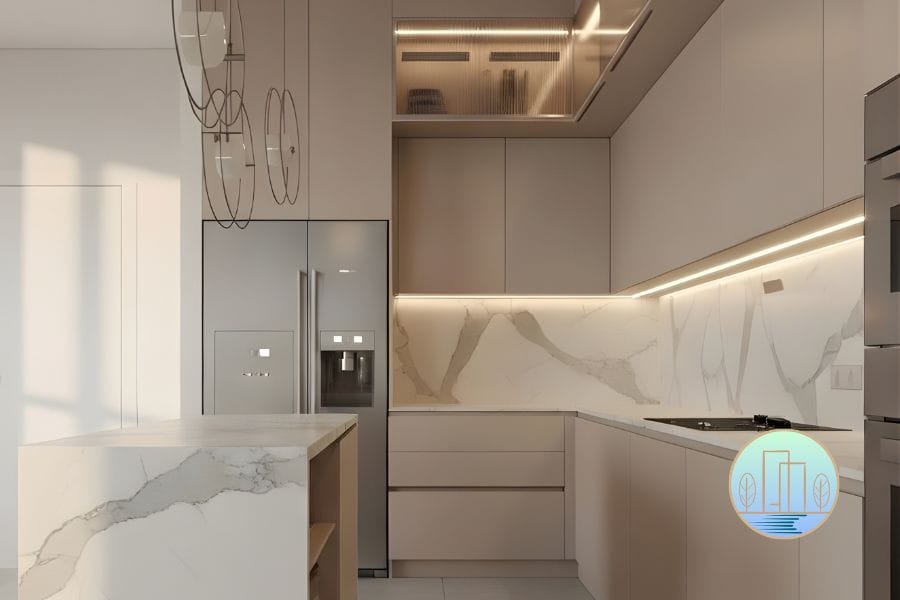
02 — Luxury Minimalist
Restraint as a Design Statement
Pale stone, brushed brass, limewash plaster, engineered timber, and the deliberate elimination of visual noise. Every element in a luxury minimalist bungalow is there for a reason — which means every element needs to be executed with precision.
This style ages exceptionally well and photographs beautifully for resale. It suits larger bungalows in Kenny Hills, Bukit Damansara, and Sri Hartamas where the spatial volume supports the stripped-back language. Budget at the higher end of the range — quality of material selection is everything.
03 — Japandi
Warm, Quiet, and Design-Literate
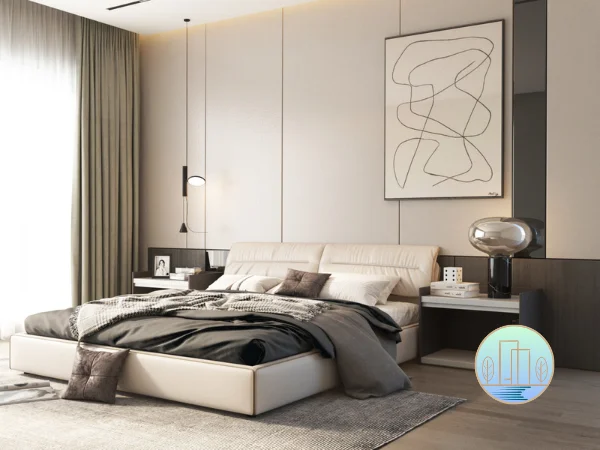
A Japanese-Scandinavian hybrid that is growing rapidly among design-literate Malaysian homeowners. Warm neutrals — cream, greige, taupe — combined with handcrafted textures, clean joinery, natural woven materials, and exceptional attention to natural light.
Japandi works particularly well in bungalows where the existing layout already provides generous room volumes. It is more forgiving on budget than luxury minimalist because it embraces imperfection — handmade tiles, visible grain, tactile surfaces.
04 — Organic Modern
The Emerging Direction in Luxury Bungalow Renovation
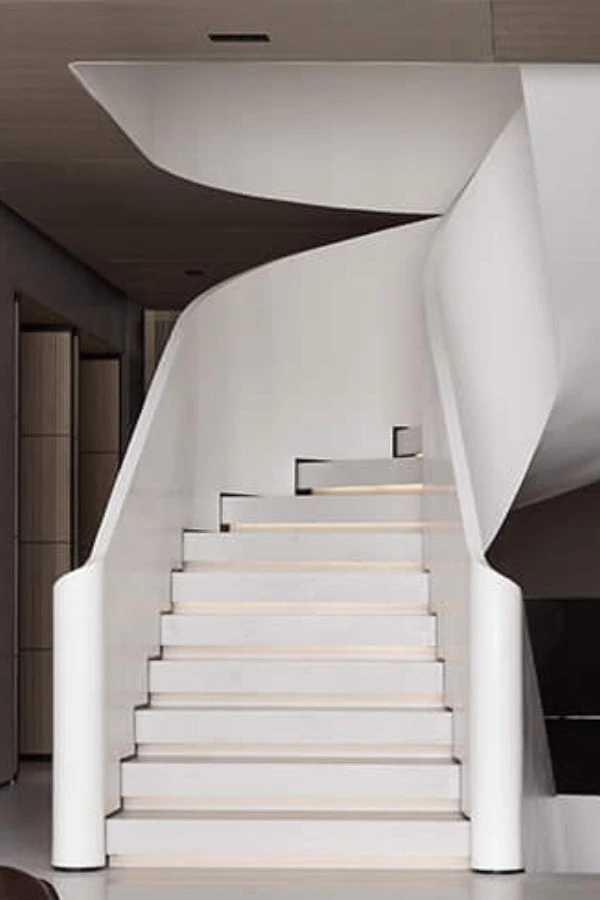
Curved walls, travertine floors, terracotta accents, limewash finishes, and living walls. Organic Modern treats the renovated interior as an extension of the landscape — softening the geometry of the existing structure and creating spaces that feel genuinely warm and human at scale.
More complex to execute than the other three styles — curved walls require specialist plasterers, travertine requires careful sealing and maintenance, and the palette needs a confident hand. At its best, it produces some of the most striking bungalow renovations in the market.
Browse our luxury bungalow design inspiration gallery · View completed renovation projects
Where to Focus Your Bungalow Renovation Budget
Not every room delivers equal return on renovation investment. These are the six spaces that most consistently improve daily liveability and add measurable value to a renovated bungalow in Malaysia.
Kitchen — Wet & Dry
The Heart of the Home
The kitchen is the single space with the greatest impact on daily life and resale value. Malaysian bungalows traditionally separate a "dry" kitchen (display and cooking) from a "wet" kitchen (washing, heavy cooking, domestic work) — a split that still makes complete sense climatically and functionally.
A full kitchen renovation — new layout, waterproofing, drainage stack relocation, custom cabinetry, countertops, and appliances — runs RM 60,000 to RM 250,000 depending on the grade of materials and the complexity of the layout change.
Master Suite
Private Retreat, Properly Designed
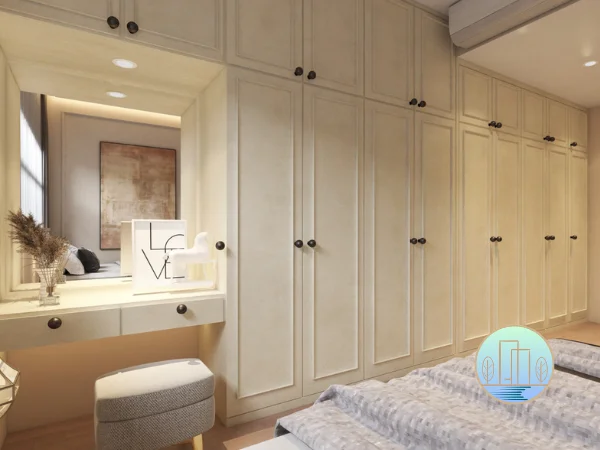
Master bedroom, walk-in wardrobe, and en-suite bathroom planned as a single unified suite — not three rooms that happen to be adjacent. The WIC should be designed around your actual wardrobe, not a generic depth. The en-suite should have proper waterproofing from the slab up, not a patched repair over the existing system.
A quality master suite renovation including WIC, en-suite with freestanding bath, and ceiling design runs RM 80,000 to RM 200,000+.
Living & Dining
The Arrival Experience
The ground floor social area sets the tone for the entire home. Opening up the living-dining-kitchen connection — removing non-structural dividing walls and creating a flowing open plan — is the single most impactful spatial change you can make in most 1980s and 1990s bungalows.
Combined with a double-volume ceiling or void (where structurally viable), this creates a sense of volume and light that cannot be achieved through any amount of cosmetic intervention.
Bathrooms
Waterproofing First, Aesthetics Second
The most common renovation failure in Malaysian bungalows — bathrooms that look new for two years, then start leaking through to the room below. This is almost always a waterproofing failure, not a tile failure. Every bathroom renovation by Houz Design is stripped to the structural slab, waterproofed with a proper membrane system, and rebuilt from the screed up. No exceptions.
Facade & Entrance
First Impression, Market Value
The exterior facade is the most visible signal of what the home is worth — to guests, to neighbours, and to potential buyers. A refreshed facade — new render, feature cladding, new entrance gate, updated driveway, and planted screening — can transform the perceived value of a bungalow without touching the interior. In established areas, this is often the best-ROI renovation element available.
Outdoor Living
Unlocking the Land You Already Own
Most Malaysian bungalow plots have significantly underused outdoor space. A garden pavilion, extended pool deck, covered dining area, or landscape redesign transforms how the property feels and functions — without requiring council submission in most configurations. Outdoor living improvements deliver disproportionately high impact relative to their cost in the bungalow renovation context.
Bungalow Renovation Cost Malaysia 2026
These figures are based on Klang Valley projects as of 2026. Actual costs vary with the condition of the existing structure, the grade of materials specified, and whether structural work is involved.
| Renovation Level | Cost Range (KL / Selangor) | Timeline | Council Approval |
|---|---|---|---|
| Level 1 — Cosmetic Refresh | RM 80,000 – RM 200,000 | 2 – 4 months | Not required |
| Level 2 — Full Interior Renovation | RM 300,000 – RM 800,000 | 5 – 9 months | May be required (M&E, structural walls) |
| Level 3 — Renovation + Extension | RM 500,000 – RM 1.5M+ | 10 – 18 months | Required — architect submission |
| Luxury Full Gut (large bungalow) | RM 1M – RM 2.5M+ | 12 – 20 months | Required — full submission |
Cost by Key Renovation Space
| Space | Cost Range | What Is Included |
|---|---|---|
| Kitchen (dry + wet) | RM 60,000 – RM 250,000+ | Layout redesign, waterproofing, custom cabinetry, countertop, appliances, M&E |
| Master suite (BR + WIC + bath) | RM 80,000 – RM 200,000+ | WIC carpentry, bathroom rebuild with waterproofing, ceiling, lighting, flooring |
| Living & dining area | RM 40,000 – RM 120,000 | Ceiling design, lighting, flooring, feature wall, carpentry, open-plan works |
| Standard bathroom | RM 15,000 – RM 45,000 | Full strip to slab, waterproofing membrane, new tiles, fittings, ceiling |
| Facade and exterior | RM 30,000 – RM 150,000+ | Render, cladding, entrance gate, driveway, landscape, external lighting |
| Rear extension (structural) | RM 150,000 – RM 450,000+ | Structural frame, roof, windows, M&E rough-in, internal fit-out, council fees |
| Swimming pool (standard) | RM 120,000 – RM 280,000 | Pool structure, tiling, coping, filtration, pump room, landscaping around pool |
How a Bungalow Renovation Works with Houz Design
A bungalow renovation managed by Houz Design follows a structured process designed to protect your budget, your timeline, and the quality of the outcome. The most expensive renovations are almost always the ones where the sequence was skipped or compressed.
Interior design is integrated from the first brief — not engaged after the structure is complete. This eliminates the most common source of cost overruns: M&E runs in the wrong location, switch positions that conflict with joinery, drainage stacks that prevent the bathroom layout the client actually wanted.

Design Consultation & Site Assessment
We visit the property, assess the existing structure, document what is there, and understand your brief. This single meeting provides the clarity needed to scope the project correctly — and avoid costly scope changes later.
Design Brief & Concept Direction
Your lifestyle, family requirements, design preferences, and budget are translated into a clear brief. Concept direction is established — design style, material palette, spatial approach — before detailed design begins.
Space Planning & Interior Design
Floor plans, ceiling designs, joinery layouts, lighting positions, and material selections are developed. Every M&E position is coordinated with the design — no conflicts between the finished room and the systems behind it.
Engineering & Authority Submission (if required)
For Level 3 structural works, architectural and engineering drawings are prepared and submitted to the relevant local authority. Houz Design manages the complete submission and approval process.
Demolition & Site Preparation
Selective or full demolition of the specified scope. At this stage, hidden defects are documented and a formal variation protocol is followed — no assumptions, no surprises.
Construction & M&E Works
Structural works, waterproofing, M&E rough-in, plastering, tiling, and internal wet works proceed in sequence. Site management ensures quality at every stage — not inspected only at the end.
Dry Works, Carpentry & Finishes
Ceilings, feature walls, custom carpentry, flooring, painting, and architectural detailing are installed. Every element is measured against the approved design — not improvised on site.
Fixtures, Snagging & Handover
Sanitary ware, light fixtures, switches, hardware, and soft furnishings are installed. A full defect walk-through is conducted and all items are rectified before handover. You receive a home that is complete — not still carrying a punch list.
When Does Bungalow Renovation Need Council Approval?
The single most common regulatory mistake in bungalow renovation is assuming that work can proceed without approval because "it is just renovation." The rule is straightforward: touch the structure, the footprint, or the external envelope — and you need approval before work begins.
Works That Generally Do NOT Require Approval
- Repainting — interior and exterior
- Replacing non-structural flooring
- Replacing kitchen cabinetry without structural change
- Refreshing bathrooms without altering drainage layout or structural walls
- Installing new light fixtures, fans, and switches
- Replacing windows and doors within the existing opening size
- Soft furnishing and décor changes
Works That Require Council Approval
- Removing or adding any load-bearing wall
- Building any rear, side, or rooftop extension
- Changing the external facade or envelope
- Adding a swimming pool
- Building or altering a car porch
- Any structural modifications to roof, columns, or beams
- Converting a space from one use to another
- Relocating the main drain stack or sewerage connection
Which Authority Covers Your Bungalow?
| Location | Local Authority |
|---|---|
| Kuala Lumpur | DBKL |
| Petaling Jaya | MBPJ |
| Subang Jaya / Shah Alam | MBSJ |
| Puchong / Seri Kembangan | MPSJ |
| Kajang / Semenyih | MPKj |
| Ampang / Hulu Langat | MPAJ |
| Klang / Port Klang | MPK |

Houz Design manages authority submissions for bungalow renovations across all Klang Valley local authorities. View our KL service area.
Should You Renovate Your Bungalow or Knock It Down and Rebuild?
This is the most consequential question a bungalow owner can ask — and the honest answer depends on the condition of the existing structure, the extent of the transformation you want, and the financial case for each option.
Renovate when —
- The structural frame is sound — no spalling concrete, no significant settlement
- The layout is workable — rooms can be reconfigured within the existing frame
- M&E systems can be replaced without full structural demolition
- The budget does not approach the cost of a comparable new build
- The architectural character of the existing home has value worth preserving
- The timeline for renovation is significantly shorter than you can afford to wait for a rebuild
Knockdown and rebuild when —
- The structure has serious defects — spalling, foundation settlement, major roof failure
- The layout cannot meet your needs even with substantial extension
- M&E systems are entirely deteriorated throughout — rewiring a ghost frame costs nearly as much
- You want a completely different architectural character — not an improved version of what is there
- The renovation cost approaches 70–80% of a comparable new build cost
- The land is well-located and a rebuilt home will deliver significant market value uplift
Read the full knockdown and rebuild guide for Malaysia · Request a site assessment

Part of the Landed House Design Cluster
This page is part of Houz Design's landed house design and interior design service hub. Explore the full cluster below.
Landed House Interior Design
The pillar hub covering all landed house design and renovation service paths in Malaysia.
View hub
Bungalow Design & Build
Design, engineering, and construction of a new bungalow on a vacant or cleared plot — complete service.
View service
Knockdown & Rebuild
For bungalow owners who prefer to demolish the existing structure and build a completely new home.
View service
House Extension
Adding rear, side, or rooftop extensions to bungalows — design, approval, and construction managed.
View service
Bungalow Renovation — Service Locations
Bungalow Renovation — In-Depth Guides
These spoke articles go deeper on every aspect of bungalow renovation. Each one is written by the Houz Design team based on direct project experience.
Cost Guide
True Cost of Building & Renovating a Luxury Bungalow Malaysia
PSF brackets, professional fees, hidden costs, and the full budget picture. Updated 2026.
Read guide
Design Inspiration
Luxury Bungalow Design — Style & Inspiration Gallery
Modern Tropical, Luxury Minimalist, Japandi, and Organic Modern — with completed project references.
View gallery
Location Guide
Anyara Hills Semenyih — Design, Architecture & Build Guide
A detailed guide for homeowners on premium hillside plots in the Semenyih corridor.
Read guide
Interior Design
5 Fundamentals of Bungalow Interior Design
The five design decisions that determine whether a bungalow renovation succeeds or disappoints.
Read guide
Contractor Guide
How to Choose a Reliable Bungalow Renovation Contractor in KL
The questions to ask, the red flags to watch for, and how to structure your contract properly.
Read guide
Mistakes Guide
Common Mistakes to Avoid in a Bungalow Renovation
Seven predictable and expensive mistakes — and how to prevent every one of them.
Read guide
Bungalow Renovation Malaysia — FAQ
The questions every bungalow owner asks before committing to a renovation project. If yours is not here, speak to our team directly.
How much does bungalow renovation cost in Malaysia in 2026?+
Cost ranges by scope: Level 1 (cosmetic refresh) — RM 80,000 to RM 200,000. Level 2 (full interior renovation) — RM 300,000 to RM 800,000. Level 3 (structural extension + renovation) — RM 500,000 to RM 1.5M+. Luxury full gut renovation of a large bungalow — RM 1M to RM 2.5M+.
Always add a 10–15% contingency above the agreed contract sum for older properties where hidden defects are commonly discovered once demolition begins.
Is it worth renovating an old bungalow in Malaysia?+
In most established locations, yes. A well-executed bungalow renovation in Petaling Jaya, Bangsar, Ampang, or Damansara delivers a return that equals or exceeds the renovation cost on well-located land. The exception is when the existing structure has severe structural defects, when M&E systems are entirely deteriorated throughout, or when renovation cost approaches 70–80% of a new build cost — in which case knockdown and rebuild may be the more rational path.
Do I need council approval to renovate my bungalow?+
For purely internal, non-structural work — flooring, painting, cabinet replacement, bathroom retiling — no approval is required. The moment any structural element is changed (load-bearing walls, roof, foundation), or any new built-up area is added (extension, new car porch, pool), formal approval from the relevant local authority (DBKL, MBPJ, MBSJ, or MPKj) is mandatory before work begins. A registered architect must prepare and sign the submission drawings.
How long does a full bungalow renovation take?+
Level 1 cosmetic refresh: 2 to 4 months. Level 2 full interior renovation: 5 to 9 months depending on bungalow size. Level 3 structural renovation plus extension: 10 to 18 months from brief to handover — this includes the 3 to 6 months required for design, engineering, and council approval before construction begins.
What are the most important spaces to renovate in a bungalow?+
The spaces with greatest impact on daily liveability and resale value are: the kitchen (dry and wet), the master suite (bedroom, WIC, en-suite), the main living and dining area, and the facade and entrance experience. A well-designed kitchen alone can transform how the entire ground floor feels and functions — and adds more measurable resale value than almost any other single renovation element.
What should I know about renovating a 1970s or 1980s bungalow in Malaysia?+
Pre-1990 bungalows require additional due diligence before renovation begins. For 1970s homes: asbestos testing is essential (common in ceiling boards, roof insulation, and floor tiles). Original electrical wiring is aluminium and well past safe service life — full rewire is mandatory for any full renovation. Foundation may be unreinforced — confirm before adding structural load for extensions.
For 1980s homes: check for concrete spalling at columns and beams, which indicates corroding rebar. Waterproofing has almost certainly failed at all wet areas and the rooftop slab. Electrical systems are typically 3-pin UK standard and need replacing for modern load requirements including EV charging and high-capacity AC.
Should I renovate or knock down and rebuild my bungalow?+
Renovate when the structure is sound, the layout is workable, and the transformation can be achieved within the existing frame. Knockdown and rebuild when: the structure has significant defects, the layout fundamentally cannot meet your needs, all M&E systems are entirely deteriorated, you want a completely different architectural character, or renovation cost is approaching 70–80% of what a new build would cost on the same plot.
A professional site assessment takes one afternoon and answers this question definitively for your specific property — before you commit to either path. Read the full knockdown and rebuild guide.
How do I start a bungalow renovation with Houz Design?+
The first step is a design consultation and site assessment at your property. We assess the existing structure, understand your brief and priorities, and give you an honest scope and cost orientation — so you have the information you need before committing to any scope or engaging any contractor.
Author: Ashley Lye Renovation & Interior Design Writer, Houz Malaysia
Ashley Lye writes about bungalow renovation, landed property design, and home improvement across Malaysia. Working closely with the Houz architecture and interior design team in Kuala Lumpur, Ashley translates real project experience — from council submissions to construction handover — into practical, honest guidance for homeowners navigating one of the biggest investments of their lives. When Ashley isn't writing about renovation, you'll find her visiting completed Houz projects and asking the homeowners what they wish they'd known before they started.

Recent Comments