
The best double storey kitchen design in Malaysia separates wet and dry cooking zones, opens the layout toward dining and living areas, maximises vertical storage with floor-to-ceiling cabinetry, and uses layered lighting to compensate for the ground floor's limited natural light. Getting these four things right transforms the kitchen from the most frustrating room in the house into its most functional one.
Ask any Malaysian homeowner what they would change first about their double storey house, and the answer is almost always the kitchen. Not the bedrooms. Not the bathrooms. The kitchen.
It's not hard to understand why. Most double storey homes in Malaysia — particularly terrace and semi-detached houses built before 2010 — were designed with kitchens that made sense for a different era. Small. Walled off. Tucked to the back. Built for a time when cooking was a contained, private activity rather than the social, multi-tasking, family-wide daily event it actually is.
Your kitchen is where homework happens while dinner is being cooked. Where weekend mornings blur into lunch. Where guests inevitably end up no matter how carefully you've arranged the living room. When that space is poorly designed — cramped, dark, disconnected from the rest of the home — it creates friction that touches every single day of your family's life. Read our full guide on kitchen extension in KL.
This guide addresses the specific design challenges that double storey kitchens present in Malaysia, with practical, proven solutions for each one. Whether you're planning a full kitchen renovation or designing from scratch, the principles here will help you get it right the first time.
For a broader context on what a full home renovation involves alongside a kitchen upgrade, our double storey house design and renovation Malaysia guide covers the complete picture.
The Unique Kitchen Challenges in a Double Storey Home
Before jumping to solutions, it helps to understand why double storey kitchen design is a distinct discipline — not just a larger version of a single-storey kitchen project.
The ground floor receives less natural light. In a double storey home, the first floor takes most of the sky view. The ground floor kitchen, particularly if it sits toward the back of the house, can feel cave-like without deliberate design intervention.
The wet kitchen and dry kitchen tension is real and unavoidable. Malaysian cooking produces steam, oil, and strong aromas that need proper containment. But modern family life also demands an open, social kitchen that connects to the living and dining areas. These two needs are in direct conflict — unless the design resolves them intelligently.
Vertical space is abundant but underused. Double storey homes typically have generous floor-to-ceiling heights on the ground floor. Most kitchens use only the bottom two-thirds of this height, leaving significant storage potential completely untapped.
The kitchen is the connective tissue of the ground floor. In a double storey home, the kitchen's relationship to the dining room, the outdoor utility area, and the staircase all affect how the entire ground floor functions — not just the kitchen itself.
Each of these challenges has a clear design response. We'll go through them one by one.
1. The Wet Kitchen / Dry Kitchen Split: Getting This Right Changes Everything
Why this matters more in Malaysia than anywhere else
The wet kitchen concept is not just a preference in Malaysian homes — it's a functional necessity. When you're cooking nasi lemak, rendang, or anything with belacan, the steam and oil and aroma need to be somewhere they won't permeate the rest of the house. A wet kitchen with a separate exhaust system, sealed off from the main living area, handles this.
At the same time, you want a dry kitchen that feels open, sociable, and connected to the dining and living spaces. A beautiful island bench, good pendant lighting, a clean countertop — this is the kitchen that shows up in the photos and that your family actually gathers around.
How to execute the split properly
The most effective layouts position the wet kitchen at the rear of the home — sometimes in an extended utility area — with a sliding glass door or wide doorway connecting it to the dry kitchen. This allows the two spaces to function as one large kitchen when needed, while giving you the option to close off the wet zone during heavy cooking.
The dry kitchen then opens freely toward the dining area. Remove the wall entirely if possible, or replace it with a wide opening. Add an island or breakfast bar at the threshold and you've created the connected, social kitchen that modern family life actually needs.
The separation isn't just practical — it's a significant quality-of-life upgrade. Homeowners who make this change consistently say it's the single renovation decision they wish they had made sooner.
2. Opening the Kitchen to the Dining and Living Areas
The closed kitchen problem
The standard older Malaysian double storey layout puts the kitchen behind a full wall, often with a small doorway and sometimes a pass-through window. The logic was sound in its era: contain the cooking, keep the smells away from guests, maintain a clear separation between the functional and social parts of the home.
That logic doesn't hold for how most Malaysian families actually live today.
The open-plan solution — and how to do it safely
Opening the wall between the kitchen and dining area is the single most transformative renovation move available on the ground floor of a double storey home. When done properly — meaning with structural engineering involved where load-bearing walls are removed, and a proper steel beam installed to carry the loads — it creates a ground floor that feels completely different.
Light moves across the full width of the space. The cook is part of the conversation rather than isolated from it. Children doing homework at the dining table are visible from the kitchen. The space feels larger, more generous, and genuinely easier to live in.
An island bench at the kitchen-dining boundary completes the transition. It functions simultaneously as an additional prep surface, a casual dining spot, and a social anchor point when you have guests.
To see what this transformation looks like in practice on a real Malaysian home, our modern kitchen design project Malaysia in Kelana Jaya shows how a bar-style kitchen was integrated into the ground floor living space — completely changing how the family uses the home on a daily basis.
3. Maximising Vertical Storage: The Most Underused Opportunity in Malaysian Kitchens
Why most kitchens stop short
Walk into almost any double storey house kitchen in Malaysia and you'll see the same thing: wall cabinets that end about 30 to 40 centimetres below the ceiling, leaving a gap that collects dust and does nothing useful. On a ground floor with 3-metre-plus ceiling heights, this represents a significant missed opportunity.
Floor-to-ceiling cabinetry: what it achieves
Taking your wall cabinets all the way to the ceiling delivers three distinct benefits. First, it dramatically increases storage capacity — essential in a household where kitchen equipment, dry goods, and appliances compete for space. Second, it eliminates the awkward gap that collects grease and dust above standard cabinets. Third, it makes the kitchen feel taller and more refined — a design effect that's disproportionately large relative to the cost of the additional cabinet height.
The upper cabinets beyond comfortable arm-reach work best for seasonal items, large appliances used infrequently, and bulk storage. Tall pull-out larder units adjacent to the refrigerator handle daily pantry needs with far more efficiency than conventional lower cabinets.
Under-stair storage: a genuinely underused asset
In most double storey homes, the space beneath the staircase is either left open and awkward or used for a random collection of shoe racks and cleaning equipment. With custom joinery, this space becomes one of the most useful storage zones in the kitchen.
Built-in drawers fitted to the triangular profile of the stair soffit. A broom and mop cupboard with a full-height door. A small wine or drinks station with a refrigerated drawer. The geometry is unusual, but a good carpenter or joinery specialist handles it routinely. The result is storage that looks intentional and integrated rather than improvised.
4. Lighting Strategy: The Detail That Separates Good Kitchens from Great Ones
The layered lighting framework
A single overhead light fitting does not constitute kitchen lighting. It illuminates the middle of the room adequately and leaves every work surface shadowed by the person standing at it. Proper kitchen lighting has three distinct layers, each serving a specific purpose.
Ambient lighting provides the overall illumination of the space. In a kitchen with high ceilings, recessed downlights distributed evenly across the ceiling plane work well. Dimmable circuits give you control over the mood — brighter for cooking and cleaning, softer for casual evening use.
Task lighting illuminates the specific surfaces where work happens. Under-cabinet LED strips directed at the countertop eliminate shadows at prep areas. Over-island pendant lights serve both task and aesthetic functions — they're the most design-forward element in a kitchen's lighting scheme, and the one that tends to appear most prominently in the finished photography.
Accent lighting highlights design features: the texture of a stone splashback, the grain of timber cabinetry, the contents of open shelving. It's the layer that makes a kitchen feel designed rather than simply functional.
Compensating for limited natural light on the ground floor
The ground floor of a double storey home, especially in terrace houses where both side walls adjoin neighbouring properties, receives natural light from the front and rear only. The kitchen, positioned at the back, often gets very little natural daylight.
Several design responses help. A skylight positioned directly above the kitchen — technically more complex but achievable in most structures — brings in daylight from above throughout the day. A glass-panel rear door or large window in the wet kitchen area brings light from the outdoor utility space. Light-coloured cabinet finishes and reflective countertop materials (polished stone, glossy surfaces) amplify whatever natural light is present.
For homeowners in Petaling Jaya looking at kitchen redesigns as part of a broader renovation, our team's work on kitchen design Petaling Jaya projects has consistently shown that lighting strategy is the intervention that clients most frequently say they underestimated in importance before the project was completed.
5. Material Selection: Durability First, Aesthetics Second
Countertops: what actually survives a Malaysian kitchen
Malaysian cooking is not gentle on surfaces. High heat from woks, frequent chopping, oil splatter, turmeric staining, tamarind acidity — your countertop needs to handle all of it without showing its age within three years.
Quartz remains the most practical choice for the dry kitchen. It's non-porous, stain-resistant, consistent in colour and pattern, and available at price points that suit most renovation budgets. It won't tolerate direct contact with a very hot wok base — use a trivet — but for everything else in a dry kitchen context, it performs reliably.
Granite is the traditional premium option. It's genuinely hard-wearing, heat-resistant, and each slab is unique. It does require periodic sealing to maintain its stain resistance, which some homeowners are disciplined about and others aren't.
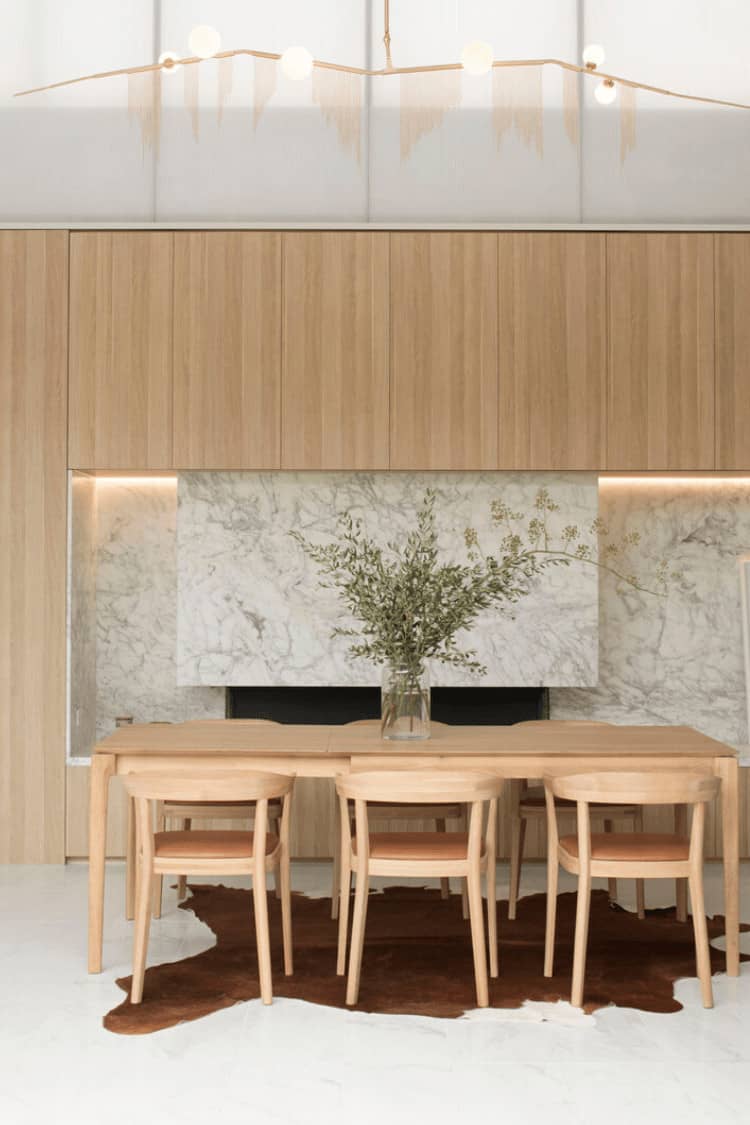
Porcelain slab is the newer entrant and has become increasingly popular in Malaysian renovations. Large-format porcelain — particularly those mimicking marble — gives you the aesthetic of stone with superior stain resistance and no sealing requirement. For the dry kitchen splashback, a full-height porcelain slab behind the hob creates a dramatic, easy-to-clean surface that's become one of the defining features of contemporary Malaysian kitchen design.
For the wet kitchen, stick with ceramic tile or porcelain tile for the splashback. They handle the intense cooking conditions of Malaysian wet cooking better than any other material and are straightforward to replace if damaged.
Cabinet finishes: the honest assessment
Matte lacquer finishes have dominated Malaysian kitchen design for the past decade. They look clean, contemporary, and elegant in showrooms. In practice, they show fingerprints readily and require a specific cleaning approach to avoid marking.
Timber veneer and timber-look laminates have aged better in the Malaysian climate than many expected. Good quality timber veneer on cabinet fronts adds warmth that helps balance the cool stone of countertops. The key qualifier is quality — poorly applied veneer in Malaysia's humidity will lift at the edges within a few years.
High-gloss finishes reflect light effectively in darker kitchens, which makes them genuinely useful in ground floor kitchens with limited natural light. They show marks more clearly than matte finishes but wipe clean more easily.
The most consistent advice from experienced Malaysian kitchen designers: invest in the quality of the cabinet carcass and hardware (hinges, drawer runners, pull-out mechanisms) before the finish. The finish can be refreshed. A poorly constructed carcass is a problem that lives with you for the life of the kitchen.
6. Layouts That Actually Work for Malaysian Family Life
The L-shape and its limitations
The L-shaped kitchen is the most common layout in older Malaysian double storey homes. Two runs of cabinets meeting at a corner, with the refrigerator at one end and the hob at the other. It works adequately for one person cooking at a time. It begins to fail when multiple family members are in the kitchen simultaneously, because there is no clear path that doesn't involve crossing someone else's work area.
The island kitchen: why it has become standard in renovated homes
An island bench placed in the centre of the kitchen fundamentally changes the workflow. The cook has 360-degree access to a work surface. Prep work happens on the island; cooking happens at the hob against the wall; cleaning happens at the sink. These three zones form a triangle — the classic kitchen work triangle — but with the generous, organised space of a central island rather than the compressed triangle of an L-shape.
The island also creates a natural social gathering point. Stools on the dining-room side of the island turn a cooking moment into a social one. Family members can sit, drink, and talk while someone cooks without being in the way.
The galley kitchen: underrated for narrow spaces
In terrace house kitchens where width is genuinely constrained, a galley layout — two parallel runs of countertops with a walkway between them — is often more efficient than an L-shape. The key is getting the aisle width right: 900mm is the minimum for one person; 1,100mm allows two people to pass comfortably. A galley kitchen with the right width works extremely well for a single cook doing serious Malaysian cooking.
For inspiration on how different layout approaches work across a variety of double storey homes, browsing unique double storey house design ideas Malaysia gives you a concrete sense of how real kitchens in real Malaysian homes handle these challenges.
7. Multi-Generational Households: Designing for Everyone at Once
The reality of multi-generational cooking in Malaysia
Many Malaysian double storey homes house two or three generations simultaneously. Grandparents with specific cooking habits and preferences. Parents managing modern work-from-home schedules. Teenagers with their own eating patterns. Each generation uses the kitchen differently and at different times.
This creates a specific design challenge: how do you build a kitchen that works for a grandmother who wants to cook traditional Malaysian food at 6am and a teenager who wants to make instant noodles at midnight?
Design responses that serve everyone
Adjustable-height work surfaces or a mix of counter heights accommodates different users comfortably. A dedicated noodle/rice cooking station near the hob — with immediate access to a pot-filler tap, a deep sink, and organised storage for the rice cooker and steamer — makes the grandmother's routine easier without compromising the modern kitchen aesthetic.
A separate small pantry or secondary storage area stocked with the traditional ingredients — cincalok, dried shrimp, various belacans, tamarind blocks — keeps those items organised and accessible without cluttering the main kitchen storage.
This multi-generational dimension is something we explore in depth in our guide on multi-generational home design for double storey houses in Malaysia — a specific challenge that deserves dedicated thinking rather than a generic design response.
8. Smart Technology Integration: What's Worth It and What Isn't
Plan your infrastructure now, add technology later
Smart kitchen technology in Malaysia has moved beyond novelty but hasn't yet reached the point of being essential in every home. What has become standard — and what you genuinely regret not including — is the infrastructure that allows technology to be added later.
This means sufficient electrical points at the right locations (above the island, inside pantry units, at appliance parking areas). It means planning for a potential induction cooktop even if you're currently installing gas, because the switch is happening and the electrical requirements need to be planned in advance. It means data points in the kitchen if your household uses tablets or displays for recipes or entertainment.
What to invest in now
A motorised hood that activates automatically when the hob is turned on is a genuine quality-of-life improvement in a Malaysian kitchen — particularly in a wet kitchen where you won't always remember (or want to stop and turn it on manually). Sensor-activated under-cabinet lighting in the island is another low-cost, high-daily-use upgrade. Built-in waste disposal in the sink reduces a common Malaysian kitchen frustration significantly.
Skip the internet-connected refrigerator and the voice-activated tap until the technology matures. Your infrastructure will be ready for them when you are.
Working with a Designer: What Good Kitchen Design Consultation Looks Like
The questions worth asking early
Before committing to any kitchen design direction, a good designer should be asking you specific questions: How many people cook simultaneously in your household? Do you cook wet Malaysian food daily or occasionally? How often do you entertain, and in what style? What are your storage frustrations with your current kitchen?
Generic kitchen designs produced without this information produce generic results. A kitchen designed around how your family actually cooks — with the right zones, the right storage, the right appliances in the right places — is a fundamentally different product from a kitchen designed to look good in a brochure.
Getting professional guidance
If you're planning a kitchen renovation as part of a broader double storey house redesign, working with a double storey house design service that handles both the interior design and the build management is significantly more efficient than coordinating a designer and a contractor separately. The design decisions that affect the build — opening walls, relocating plumbing, adding electrical circuits — need the builder's input at the design stage, not as an afterthought after plans are drawn.
Frequently Asked Questions
What is the ideal kitchen layout for a Malaysian double storey terrace house? An open-plan dry kitchen with an island bench, connected to the dining area, and separated from a rear wet kitchen by a sliding glass door. This combination handles the wet/dry cooking split, creates a social kitchen dynamic, and allows the ground floor to feel spacious and connected.
How much does a double storey kitchen renovation cost in Malaysia? A targeted kitchen renovation — cabinetry, countertops, appliances, and lighting — typically ranges from RM40,000 to RM120,000 depending on size, material quality, and whether structural work is involved. Projects that include opening walls or adding wet kitchen extensions will sit at the higher end of this range.
Should I keep a separate wet kitchen in my Malaysian home? Yes, if you cook Malaysian food regularly. The steam, oil, and aromas produced by wok cooking and high-heat traditional recipes genuinely benefit from containment. A well-designed wet kitchen doesn't limit your cooking — it protects the rest of your home and extends the life of your dry kitchen finishes.
What countertop material is best for a Malaysian kitchen? Quartz for the dry kitchen (non-porous, stain-resistant, low-maintenance), and ceramic or porcelain tile for the wet kitchen splashback (handles intense heat and humidity reliably). Porcelain slab is an increasingly popular premium option for the dry kitchen that combines marble aesthetics with practical performance.
How do I get more natural light into my ground floor kitchen? The most effective options are a skylight directly above the kitchen, a large glass-panel rear door or window in the wet kitchen, and light-coloured reflective materials on cabinets and countertops. Strategic under-cabinet and above-cabinet LED lighting can compensate significantly for limited natural daylight.
Conclusion: A Kitchen That Works as Hard as Your Family Does
The kitchen in a double storey Malaysian home carries more daily responsibility than any other room in the house. It feeds the family, hosts the homework, accommodates the grandparents' cooking traditions, and needs to look presentable when guests arrive unannounced. A kitchen that handles all of this without friction is not a luxury — it's an investment in daily quality of life that pays dividends every single day.
The principles in this guide — wet/dry separation, open-plan connection to dining, floor-to-ceiling vertical storage, layered lighting, and the right materials for Malaysian cooking conditions — are not trends. They're the considered responses to specific, real challenges that Malaysian homeowners face in their kitchens. Apply them with the right design team behind you and the result is a kitchen you'll still be grateful for a decade from now.
If you're ready to start planning, our double storey house design service team works through exactly this process — from the first layout discussion through to the finished kitchen — with the structural knowledge and design experience to get both the look and the functionality right.
For broader home design context alongside your kitchen project, explore our double storey house design & renovation guide, or read our dedicated guide on multi-generational home design for double storey houses if your household spans multiple generations.

Recent Comments