
Most double storey homes in Malaysia follow a familiar script — standard layouts, predictable facades, rooms that serve one purpose and one purpose only. And while there's nothing wrong with convention, there's also nothing extraordinary about it. If you've been dreaming of a home that genuinely reflects your lifestyle, your taste, and your vision for the future, it's time to think differently.
This article explores how architects and designers across Malaysia are reimagining the double storey home — not just as a structure, but as a living, breathing space that inspires. From asymmetric facades to rooftop retreats, from light-filled atriums to staircases that double as sculpture, these ideas prove that the most exciting homes are the ones that dare to be different.
Whether you're planning a new build or considering a major renovation, understanding what's possible is the first step. You might also find it useful to explore how space planning double storey homes can work hand in hand with bold design choices to create a home that's as functional as it is beautiful.
1. Embracing Asymmetry and Dynamic Forms
The Power of Off-Centre Elements
There's a reason asymmetrical homes stop people in their tracks. When a facade breaks away from perfect symmetry — a window placed unexpectedly, a balcony that juts out at an angle, a roofline that rises and dips — it creates a sense of energy and movement that symmetrical homes simply can't replicate.
This isn't just about aesthetics. Off-centre design choices can also improve functionality. A strategically placed balcony might capture the afternoon breeze. An asymmetric overhang might shield a west-facing wall from harsh evening sun. In Malaysia's climate, these design decisions carry real weight.
If you're drawn to homes that feel genuinely distinctive, browsing examples of modern double storey house Malaysia projects can give you a strong sense of how asymmetry translates from concept to finished home.
Stepped and Cantilevered Volumes
Few architectural moves are as dramatic — or as rewarding — as a cantilever. When a section of a home appears to float above the ground, projecting outward without visible support below, it transforms a house into something closer to sculpture. Beyond the visual drama, cantilevered sections create natural shade for lower floors, reduce heat gain, and add covered outdoor areas that are genuinely usable year-round.
Stepped volumes work similarly well. By pulling floors back or pushing them forward at different heights, a home develops depth and shadow play that changes with the light throughout the day. These aren't gimmicks — they're considered architectural decisions that make a home look and perform better.
Playing with Contrasting Materials and Textures
One of the fastest ways to elevate a double storey home's appearance is through material contrast. Warm timber grain against smooth white render. Rough exposed concrete beside floor-to-ceiling glass. Dark steel frames set against natural stone cladding. When different materials meet deliberately, they create a richness that monolithic facades simply can't achieve.
The key word here is deliberate. Contrast for its own sake can look chaotic. But when material choices reflect the home's interior character, its surroundings, and the family's personality, the result is a facade that feels cohesive, considered, and completely unique.
2. Maximising Natural Light and Ventilation
Strategic Window Placement and Size
In a country where the sun shines for most of the year, the relationship between your home and natural light deserves serious thought. Too little light and a home feels cave-like and oppressive. Too much uncontrolled light and rooms become uncomfortably hot and glary.
The solution isn't fewer windows or more windows — it's smarter windows. Clerestory windows placed high on walls bring light deep into a room without direct glare. Narrow vertical windows frame views like artwork. Oversized picture windows in well-shaded walls flood living spaces with soft, diffused light. The placement of each opening should be considered against the sun's path, prevailing winds, and the room's purpose.
This kind of considered design is at the heart of what a good double storey home design Malaysia specialist brings to a project — the ability to read a site, understand its orientation, and design openings that make every room feel genuinely alive.
The Double-Height Space Revolution
Few design moves transform the feel of a home as dramatically as a double-height space. When your living room reaches up through both storeys, or your entrance foyer opens to the full height of the building, the entire scale of the home shifts. Rooms that might otherwise feel modest suddenly feel grand. The visual connection between floors creates a sense of shared space that brings families together even when they're in different parts of the home.
Beyond the emotional impact, double-height spaces also improve ventilation. Hot air rises naturally, and with the right window placement at the top of these volumes, you can create passive cooling that reduces your reliance on air conditioning — a meaningful benefit in Malaysia's year-round heat.
Incorporating Light Wells and Atriums
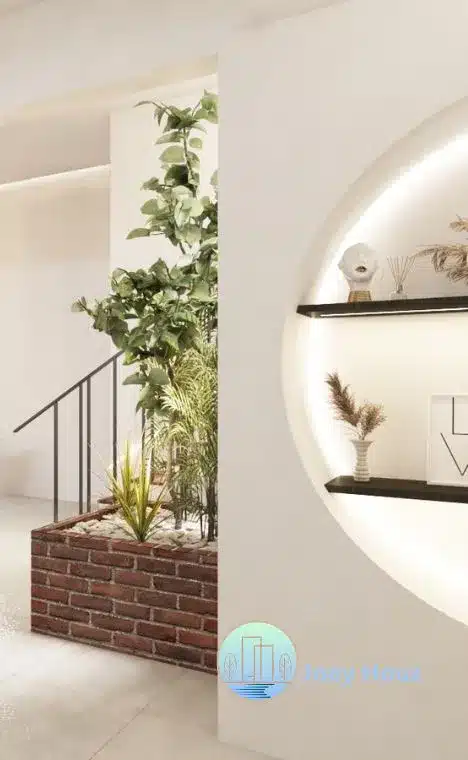
For homes on narrower plots or with deeper floor plans, light wells and atriums are a game-changer. These internal voids bring daylight and airflow into the heart of a home that would otherwise rely entirely on artificial lighting for its central spaces.
Done well, a light well becomes one of the most beautiful features in a house — a vertical garden visible from multiple floors, a slot of sky that shifts from bright morning blue to deep evening purple. It's architecture that connects you to the natural world even in the middle of a dense neighbourhood.
3. Seamless Indoor-Outdoor Integration
Extending Living Spaces Outdoors
Malaysia's climate is often framed as a challenge — the heat, the rain, the humidity. But in reality, it's an opportunity. When a home is designed to embrace the outdoors rather than shut it out, living space effectively doubles. Large sliding or bi-fold doors that open an entire wall to a covered deck blurs the boundary between inside and outside in the most satisfying way.
The result is a home that breathes. Morning coffee on a terrace that feels like an extension of the kitchen. Evening gatherings that spill naturally from the living room to the garden. These transitions aren't just pleasant — they fundamentally change how a home feels to live in.
For a real-world example of how this approach works in practice, take a look at this modern house design Taman Mayang project, where indoor-outdoor flow was central to the entire design strategy, transforming a dated home into something genuinely contemporary.
Vertical Gardens and Green Facades
Living walls — vertical gardens that climb the exterior or interior walls of a home — have moved well beyond trend status in Malaysia. They've become a serious design consideration, and for good reason. A well-maintained green facade reduces a building's surface temperature, softens street-facing elevations, and brings a natural calm to what might otherwise be a hard, urban facade.
Inside the home, a living wall visible from the main living area becomes both a focal point and a daily reminder of the value of connecting with nature. As homes in Malaysian cities grow denser and green space shrinks, bringing the garden vertical is one of the most intelligent responses available to homeowners.
Rooftop Terraces and Balcony Havens
Every flat roof is a missed opportunity unless it's been turned into something usable. A rooftop terrace — planted, furnished, and properly sheltered from rain — becomes one of the most valuable spaces in the entire home. It's private, it's elevated, and on a clear evening in Malaysia, it offers a quality of experience that no interior room can match.
Balconies, too, deserve more than the token treatment they often receive. A balcony deep enough to hold a chair and a small table, with a solid balustrade that provides genuine privacy, becomes a room in its own right. These outdoor spaces add liveability that square footage alone cannot measure.
4. Clever Space Utilisation and Multi-Functional Zones
The Art of the Mezzanine
A mezzanine is one of those design ideas that sounds simple but delivers outsized results. In a room with high ceilings, a partial upper level creates a semi-private zone — a home office, a reading corner, a child's sleeping area — without the commitment of a full additional floor. The space below remains open and airy. The mezzanine above feels tucked away and focused.
For homeowners in areas like Kajang where family sizes tend to be larger and the need for functional, adaptable spaces is real, a mezzanine can solve the perennial challenge of fitting more life into the same footprint. If you're considering a home in this area, exploring options for house design Kajang can connect you with designers who understand the local plot sizes, planning requirements, and lifestyle needs.
Transforming Hallways and Staircases
In most homes, hallways are empty corridors and staircases are purely functional. In well-designed homes, they're opportunities. A hallway lined with custom joinery becomes a library. A staircase with built-in drawers beneath each tread adds meaningful storage without consuming any additional room. Steps finished in contrasting materials, or wrapped in a bold runner, become a design statement that sets the tone for the entire home.
The staircase, in particular, deserves to be treated as a design feature rather than an afterthought. In a double storey home it sits at the heart of the building, visible from multiple spaces and used multiple times a day. Investing in its design — whether through an elegant floating structure, a sculptural balustrade, or dramatic lighting — pays dividends every single day.
Adaptable Rooms for Evolving Needs
A family's needs change. Children grow up. Elderly parents move in. Working from home becomes permanent. The homes that serve their owners best over the long term are the ones designed with this change in mind — rooms that can shift purpose without requiring structural work.
This means thinking carefully about room dimensions (large enough to be flexible), door placement (enabling multiple furniture configurations), and infrastructure (power points, data points, and plumbing in the right places to allow future adaptation). A study that can become a guest room, a playroom that can become a workshop — this kind of forward thinking is a hallmark of genuinely intelligent home design.
5. Beyond the Box: Unique Architectural Concepts
The Courtyard House Revisited
The traditional Malaysian courtyard — once a feature of older kampung homes — is enjoying a well-deserved comeback in contemporary double storey design. A central courtyard, even a modest one, transforms the character of a home entirely. It brings light and air to internal spaces. It creates a private outdoor area sheltered from the street. It gives every room a view of greenery rather than a neighbouring wall.
In dense urban settings where outdoor space is at a premium, a courtyard is often more valuable than a conventional garden. It's usable year-round, private by nature, and — when planted thoughtfully — becomes the emotional heart of the home.
Passive Design Principles in the Malaysian Climate
Building a beautiful home is one thing. Building a beautiful home that's genuinely comfortable to live in without running air conditioning twenty-four hours a day is another challenge entirely. Passive design principles — strategic orientation, deep overhangs, cross-ventilation, high-performance insulation — address this challenge at the architectural level rather than relying on mechanical systems to compensate for poor design decisions.
In Malaysia, a well-passively-designed home can feel dramatically cooler and less humid than a conventionally built neighbour. Over a twenty or thirty year ownership period, the energy savings are substantial. But the immediate benefit — a home that simply feels pleasant to inhabit — is reward enough.
Expressive Staircases as Design Features
The staircase as sculpture is one of the most powerful ideas in residential architecture. A floating staircase with a structural glass balustrade. A helical stair that rises through a double-height void. A wide, generous staircase with a landing library built into its turn. These aren't luxuries reserved for large homes — they're design decisions that can be scaled to almost any budget and transformed into the defining moment of a home's interior.
When a visitor walks into your home and immediately looks up at a staircase that seems to defy gravity, or pauses to admire the way light falls through a perforated riser, you know the design has done its job.
Conclusion: Design a Home That's Genuinely Yours
The double storey home is one of Malaysia's most enduring and practical residential formats. But practical doesn't have to mean predictable. The ideas explored in this article — asymmetric forms, light-filled atriums, living walls, adaptable rooms, expressive staircases — are not the exclusive preserve of large budgets or unusual plots. They're design principles that any homeowner, on any site, can apply with the right guidance.
What they all have in common is intentionality. The willingness to ask not just "what's the standard solution?" but "what's the best solution for this home, this family, and this site?"
If you're at the beginning of that journey, start by understanding your space. Good space planning double storey homes strategy underpins every great design decision that follows. From there, exploring what's possible with a specialist in double storey home renovation will help you translate inspiration into a plan that's grounded in reality — your reality, your budget, your lifestyle.
Your home should be one of the most personal things you ever create. Don't settle for ordinary when extraordinary is within reach. Chat now with our design experts to elevate your residence to its highest potential.

Recent Comments